The first trip to a hockey store can be overwhelming. There are a dozen pieces of protective gear, each sold in several sizes and price levels, and every parent or adult beginner wants to know the same thing: what do I actually need, and where can I save money? This guide to hockey equipment for beginners walks through each piece of gear, what it protects, how it should fit and which items are worth buying new.
Quick answer: A beginner needs skates, a helmet with a full face mask, shoulder pads, elbow pads, gloves, hockey pants, shin guards, a protective cup or pelvic protector, a stick and a mouthguard, plus a neck guard and a bag. Fit and safety matter far more than brand or price. Buy the helmet new and make sure it is certified, get skates professionally fitted, and consider used or entry-level gear for everything else while you find out whether the sport sticks.
Before You Buy: Start With Skating
If you or your child cannot skate yet, you may not need full hockey gear on day one. Most rinks, including Tulsa’s WeStreet Ice Center, offer Learn to Skate classes that require only skates, a helmet and warm clothing. Those lessons teach balance, stopping and falling safely before anyone picks up a stick. Our WeStreet Ice Center guide covers the rink’s programs and its in-house pro shop.
Once a skater is ready for a learn-to-play program or a league, it is time to assemble a full set. Always ask the program what it requires before you shop, since some loan gear to first-time players.
Hockey Equipment for Beginners: The Full Checklist
| Item | What it protects | Buy new or used? |
|---|---|---|
| Helmet with full cage or shield | Head and face | New, certified and within its expiration date |
| Skates | Feet and ankles; your connection to the ice | New or gently used, but always properly fitted |
| Mouthguard | Teeth and jaw | New |
| Neck guard | Throat and neck from skate blades | New |
| Shoulder pads | Shoulders, chest, spine | Used is fine |
| Elbow pads | Elbows and forearms | Gently used works |
| Gloves | Hands and wrists | Used is fine if the palms are intact |
| Hockey pants (breezers) | Hips, thighs, tailbone | Secondhand is OK |
| Shin guards | Knees and shins | Good used pairs are fine |
| Cup or pelvic protector | Groin | New |
| Stick | Puck handling and shooting | Either; length and flex matter most |
| Hockey socks, base layer, bag | Comfort and hygiene | Either |
The Pieces of Hockey Equipment for Beginners That Deserve Your Budget
Helmet and face protection
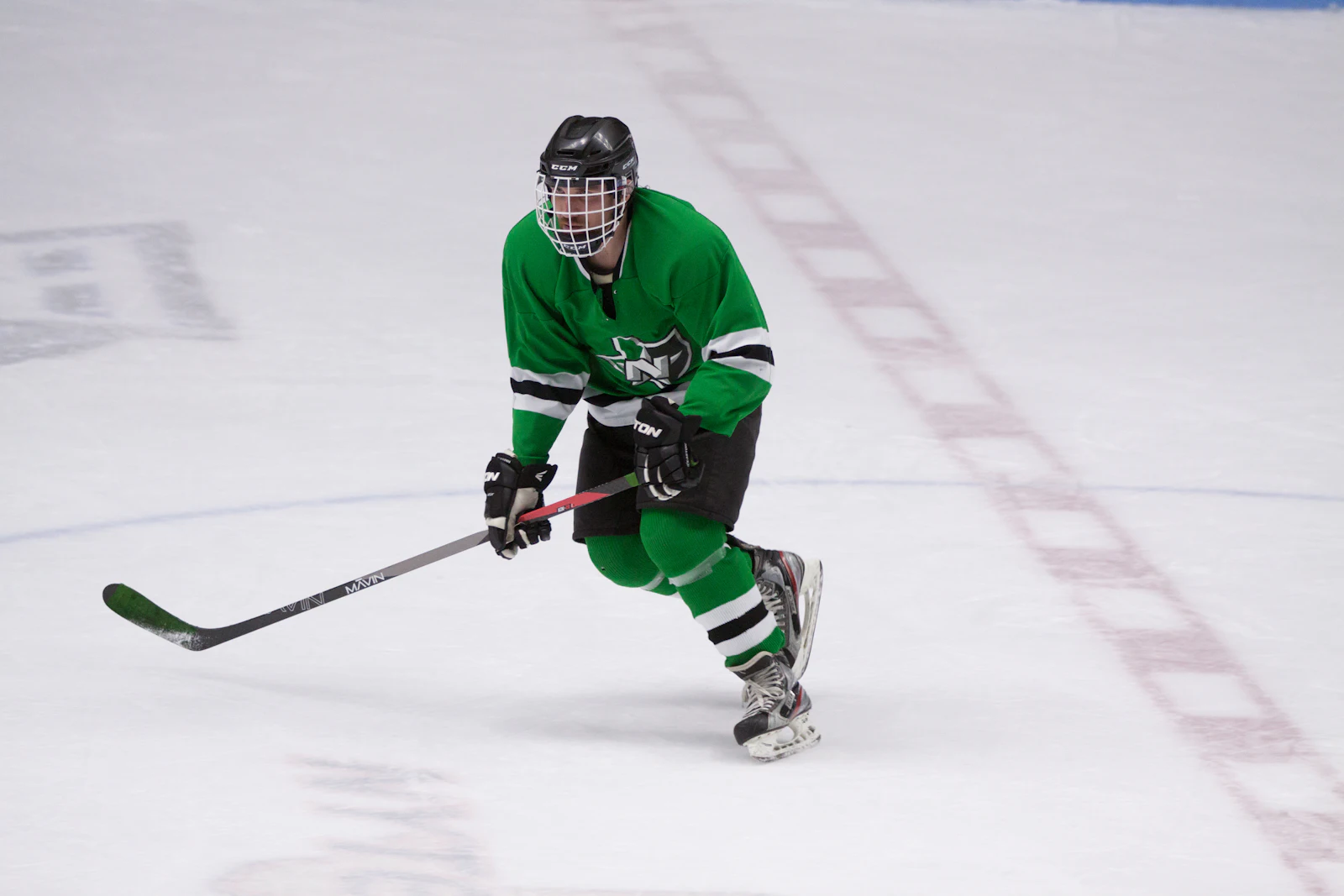
Above all, the helmet is the one item you should never compromise on. In the United States, hockey helmets are certified by the Hockey Equipment Certification Council (HECC), and certified helmets carry a sticker with an expiration date. USA Hockey requires youth players to wear a certified helmet with a full face mask, and many adult leagues have their own face-protection rules. Check your league’s requirements, and consult the USA Hockey website for the current rulebook.
As for fit, the helmet should sit snugly without pressure points, with the front edge about a finger’s width above the eyebrows. When you shake your head, it should move with you rather than slide around. Never buy a used helmet with an expired sticker, cracks or missing hardware.
Skates
Next, skates have the biggest effect on how quickly a beginner improves. Skates that are too big are the most common mistake, especially with kids who are expected to “grow into” them. A loose boot lets the heel lift and the ankle wobble, which makes skating harder and less safe.
Instead, have skates fitted at a pro shop. Hockey skate sizes usually run smaller than shoe sizes, and a good fitter will check length, width and heel lock. New skates also need to be sharpened before the first skate, and they should be resharpened regularly after that.
Mouthguard and neck guard
Fortunately, both are inexpensive and worth buying new. Many youth programs require a mouthguard, and a neck guard adds protection against skate blades. Again, check your program’s rules, since requirements differ between age groups and leagues.
Where Beginners Can Save Money on Hockey Gear
Shoulder pads, elbow pads, pants, shin guards and gloves can all be bought used, as long as they fit and are in good shape. Look for intact straps, no cracked plastic and gloves without holes in the palms. Since kids outgrow this gear quickly, used equipment often makes the most sense for younger players.
Alternatively, entry-level new gear is a good option. In general, top-of-the-line equipment is designed for advanced players and does not help a beginner learn faster. Mid-range or entry-level gear that fits well is the smarter buy.
How Each Piece Should Fit
- Shoulder pads: The shoulder caps sit on top of the shoulders, and the chest protector covers the sternum without restricting breathing.
- Elbow pads: The elbow sits squarely in the cup, and the pad meets the glove cuff and shoulder pad without big gaps.
- Gloves: Fingertips should reach close to the ends without jamming, and the cuff should overlap the elbow pad.
- Pants: They should reach the top of the kneecap, and the waist should be snug with a belt or suspenders.
- Shin guards: The kneecap sits centered in the knee cup, and the bottom reaches the top of the skate boot.
- Stick: In skates, the stick usually reaches between the chin and nose for most beginners. Shorter sticks are easier to control.
Caring for Your Gear
Hockey gear gets wet with sweat, and as a result it smells fast. After every skate, take everything out of the bag and let it dry completely. Also dry skate blades with a towel to prevent rust, and use blade guards only when walking, not for storage. Base layers and socks can go in the wash after every use, while pads can be washed occasionally according to the manufacturer’s instructions.
Where to Shop in Tulsa
For fitting and sharpening, though, a pro shop is the best starting point. The WeStreet Ice Center’s in-house shop, Sledge’s Den, sells skates and hockey equipment and offers skate sharpening and maintenance. In addition, many local programs run gear swaps or can point families toward used equipment, so it is worth asking your coach or rink staff.
For the next step after gear, our guide to hockey rules for new fans and our hockey terms glossary will help new players and parents follow what happens on the ice.
Final Tips for First-Time Buyers
- Ask your program first. Some loan gear, and all have specific requirements.
- Spend on safety and skates. Helmet, skates and mouth protection are where quality matters most.
- Buy for today, not next year. Gear that is too big protects poorly.
- Try everything on together. Pads should overlap without gaps.
- Keep receipts and labels until you are sure the fit is right.
With the right hockey equipment for beginners, the first few skates become far more comfortable, and comfort is what keeps new players coming back to the rink.
Published Oct. 23, 2026. This guide offers general information, not medical or safety certification advice. Equipment rules vary by league and age group, so always follow your program’s requirements and the manufacturer’s sizing guidance.