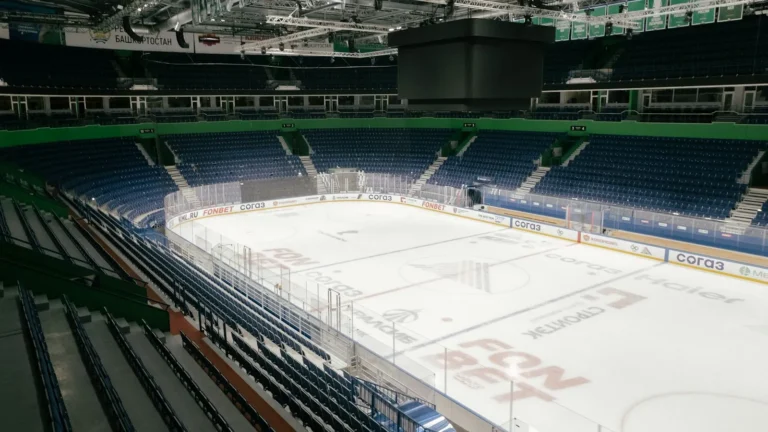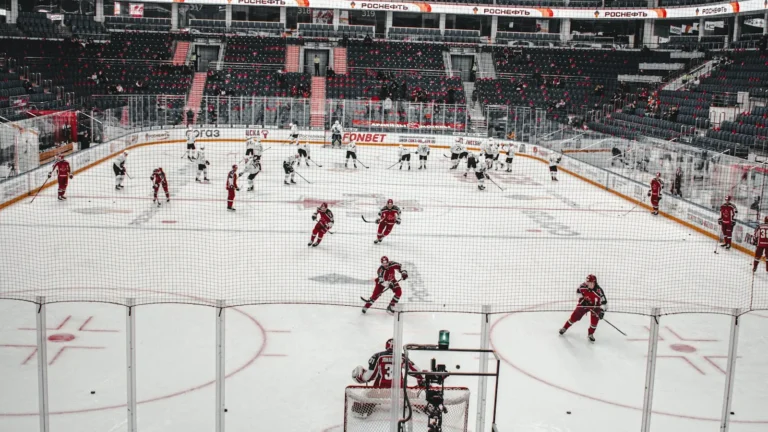
Hockey has a language of its own, and the first time you hear a BOK Center crowd groan about “icing” or roar at a “shorty,” it can feel like everyone else got a dictionary you missed. This guide explains the hockey terms you are most likely to hear at a Tulsa Oilers game, grouped by topic so you can learn them in a logical order. Each definition is written in plain English, with a note on why the term matters when you are watching from the stands.
How to use this glossary: If you are brand new to the sport, start with our plain-English guide to hockey rules, which walks through how a game works. Then come back here when you want to understand what the announcer, the person next to you or the scoreboard is talking about.
Basic Hockey Terms for the Game Itself
- Period: A hockey game has three 20-minute periods of playing time. The clock stops at every whistle, so a game usually lasts about two and a half hours.
- Intermission: The break between periods, when the ice is resurfaced. At Oilers games this is also when you will see promotions and on-ice contests.
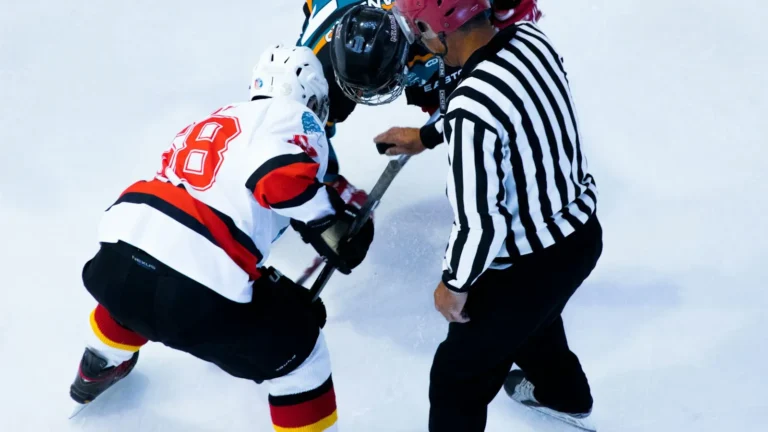
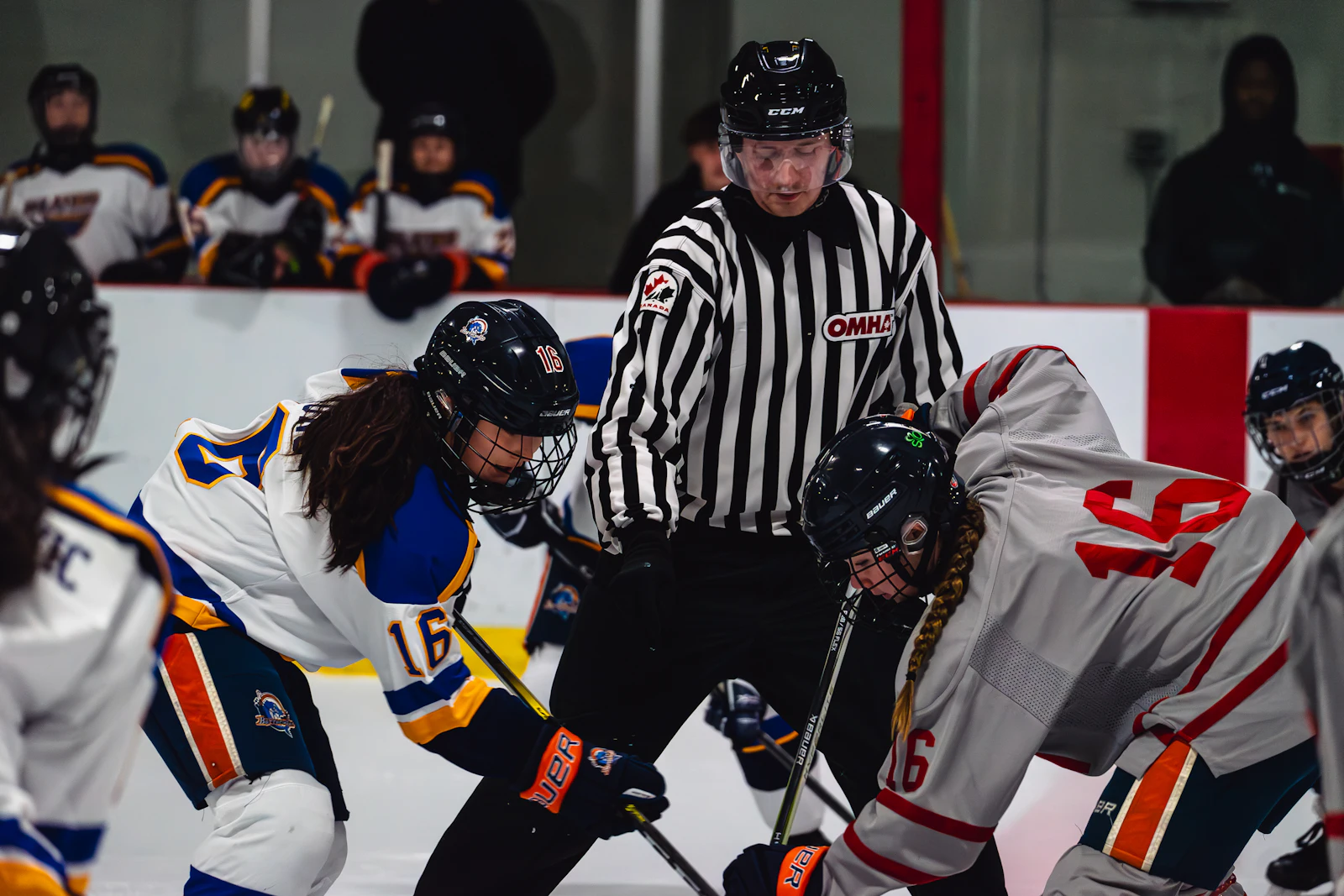
- Faceoff: The way play starts or restarts. An official drops the puck between two opposing players, usually centers, who try to win possession.
- Line change: Swapping a group of players for fresh ones. Shifts are short, often under a minute, because skating at full speed is exhausting.
- Changing on the fly: Making a line change while play continues instead of waiting for a stoppage. A sloppy change can leave a team outnumbered.
- Overtime (OT): Extra time when a regular-season game is tied after 60 minutes. In the ECHL it is a five-minute, three-on-three period.
- Shootout: If overtime ends without a goal, players take turns going one-on-one against the goaltender to decide the winner.
Hockey Terms for the Rink
- Blue lines: The two lines that divide the ice into three zones. They decide offside.
- Red line (center line): The line at center ice. It matters for icing.
- Goal line: The thin red line at each end that the puck must completely cross for a goal.
- Offensive, defensive and neutral zones: The attacking end, your own end and the area between the blue lines.
- Crease: The blue painted area in front of each net. It is the goaltender’s space, and goals can be disallowed when an attacker interferes with the goalie there.
- Boards and glass: The walls around the rink. “Along the boards” describes the battles for the puck that happen there.
- Penalty box: Where players serve penalties. Fans often call it the “sin bin.”
Rules You Will Hear Called Every Night
- Offside: An attacking player crossed the opponent’s blue line before the puck did. Play stops and a faceoff follows outside the zone.
- Icing: A team shot the puck from its own half all the way past the opponent’s goal line without anyone touching it. The faceoff then comes back to the offending team’s end, and that team cannot change lines.
- Minor penalty: A two-minute penalty for infractions such as tripping, hooking, holding or slashing.
- Major penalty: A five-minute penalty for more serious infractions, including fighting.
- Delayed penalty: When an official raises an arm but play continues until the penalized team touches the puck. Meanwhile, the other team usually pulls its goalie for an extra attacker.
- Penalty shot: A free one-on-one chance against the goalie, awarded when a player is illegally denied a clear scoring chance.
Hockey Terms for Special Teams
- Power play: When one team has more players on the ice because the other team has a player in the penalty box.
- Penalty kill (PK): The shorthanded team’s effort to survive the power play without allowing a goal.
- Shorthanded goal (“shorty”): A goal scored by the team that is killing a penalty. It is one of the biggest momentum swings in the sport. For a recent example, see our opening night recap.
- Five-on-three: A two-man advantage, which happens when one team has two players serving penalties at the same time.
- Empty net: When a trailing team pulls its goaltender late in a game for an extra skater. If the other team scores into the open net, it is an “empty-net goal.”
Shots, Saves and Scoring
- Wrist shot: A quick, accurate shot released with a flick of the wrists.
- Slap shot: The big wind-up shot, slower to release but the hardest to stop when it is on target.
- One-timer: Shooting a pass immediately without stopping the puck first. It gives the goalie almost no time to move across.
- Deke: A fake with the puck or body to move a defender or goaltender out of position.
- Five-hole: The gap between a goaltender’s legs.
- Rebound: A puck that bounces off the goalie after a save, often creating a second chance.
- Breakaway: An attacker alone with the puck and no defender between him and the goalie.
- Hat trick: Three goals by one player in a single game. Fans traditionally throw hats onto the ice to celebrate.
Strategy Terms Announcers Love
- Forecheck: Pressuring the other team in its own zone to force turnovers.
- Backcheck: Skating back hard to defend after losing the puck.
- Dump and chase: Shooting the puck deep into the offensive zone and racing to recover it, instead of carrying it in.
- Cycle: Keeping possession low in the offensive zone by passing along the boards while players rotate.
- Breakout: A team’s organized way of moving the puck out of its own zone.
- Odd-man rush: An attack with more offensive players than defenders, such as a two-on-one.
- Screen: A player standing in front of the goalie to block his view of a shot.
Statistics on the Scoreboard and in Box Scores
| Abbreviation | Meaning | Why it matters |
|---|---|---|
| GP | Games played | Shows how large a player’s sample is |
| G / A / PTS | Goals, assists, points | A point is a goal or an assist |
| +/- | Plus-minus | Goal differential while a player is on the ice at even strength or shorthanded |
| PIM | Penalty minutes | How often a player ends up in the box |
| PPG / SHG | Power-play goal / shorthanded goal | Measures special-teams production |
| SV% | Save percentage | The share of shots a goalie stops |
| GAA | Goals-against average | Goals allowed per 60 minutes |
| SO | Shutout | A game in which a goalie allows no goals |
ECHL and Minor-League Hockey Terms
- ECHL: The league the Oilers play in, one level below the AHL. Our explainer on what the ECHL is covers it in detail.
- Affiliate: An NHL or AHL club that works with an ECHL team. Tulsa’s affiliates are the Anaheim Ducks and the San Diego Gulls.
- Call-up and assignment: A call-up sends a player to a higher league; an assignment sends one down. Both happen often during a season.
- Kelly Cup: The trophy awarded to the ECHL playoff champion.
- Brabham Cup: The ECHL trophy for the best regular-season record.
- Three-in-three: Three games on three consecutive days, a common weekend format in minor-league hockey.
Fan Traditions You Will See at the BOK Center
Some hockey terms are less about rules and more about culture. Above all, a hat trick still means hats on the ice, so bring an old cap just in case. Fans also stand and count down the final seconds of a power play, and they make plenty of noise when the Wichita Thunder are in town. Our history of the Oilers-Thunder rivalry explains why those nights feel different.
If you are heading to your first game, our BOK Center game-night guide covers tickets, parking and the clear-bag policy. Ultimately, the best way to learn these hockey terms is to hear them in context, so pick a game, find your seat and listen to the crowd.
Published Oct. 23, 2026. Definitions reflect common North American usage and current ECHL overtime format. League rules can change between seasons, so check the official ECHL website for the latest details.